
What is a direct cremation funeral?
The Best Direct Cremation guide to everything you need to know about direct cremations and unattended funerals
Direct cremation funerals have grown in popularity over the past few years, with nearly 20% of funerals in the UK each year now defined as a direct cremation. It’s seen as a modern, affordable alternative to a traditional funeral, that can potentially provide the opportunity for a more personalised goodbye.
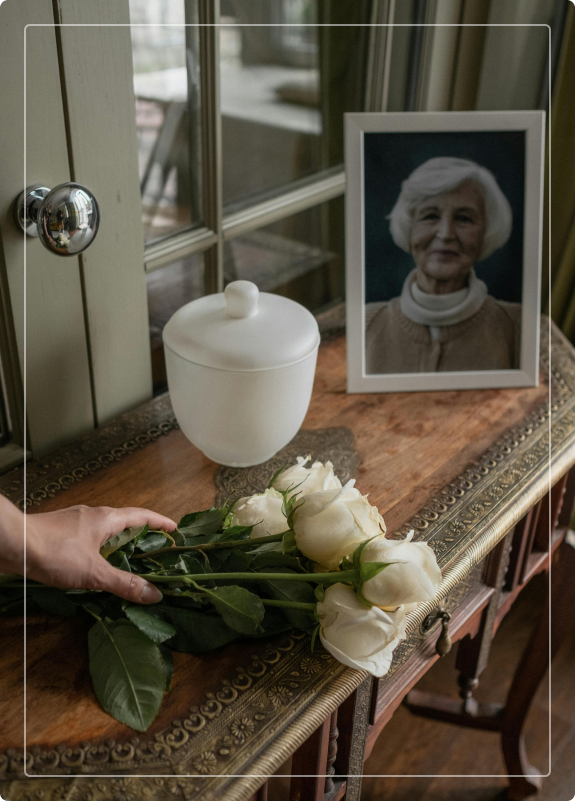
What is a direct cremation?
In its simplest definition, a direct cremation is a funeral where the cremation takes place without anyone present. It is sometimes referred to as an unattended cremation or a pure cremation. This shouldn’t mean the person who has died is treated without care – it just means that some of the peripheral funeral services associated with a traditional funeral have been removed – primarily to keep costs low and the process simple.
You can expect a direct cremation to go through the following steps.
- A chosen provider is contacted following a death – they will arrange to collect the person who’s died and take them into their care.
- The individual will be cared for and prepared for cremation in the same way as any other funeral – this will include bathing them, removing artificial items and in some cases dressing them in a particular outfit.
- At the same time, the provider will work with the family or whoever is arranging the funeral to sort out the administration and paperwork necessary for the funeral to take place.
- On the day of the funeral, the person will be placed in a coffin and transported to the crematorium. Sometimes this will be in a hearse, but often it will be in a private ambulance.
- The cremation is carried out in a professional manner, just like any other cremation.
- The ashes are then collected and returned to the family, or scattered in the grounds of the crematorium if preferred.
Things to be aware of about a direct cremation
Although that process all sounds simple, there will be some differences depending on who you choose to deliver the service. Below are some considerations or questions you may want to have answered before you choose a provider.
Providers
There are several specialist direct cremation providers, who operate on a national basis. Some of these are crematorium businesses, that have set up a logistics operation, some are digital businesses that outsource the operational delivery to the same national providers. If you want to be sure of a direct cremation done properly – then choose a local funeral director as your provider. Best Direct Cremation can ensure you get the Best funeral director near you as your service provider.
Collection from a hospital or elsewhere
Collection from a hospital is usually included in the price – this is because in many cases the person will be left in the hospital mortuary and collected at a time that is convenient to the provider. If the death occurs at home, in a care home, a hospice, or anywhere without a dedicated mortuary, no matter what time of day it is, an immediate collection is often required – there will normally be an additional fee for this.
Larger coffins
If the individual is particularly tall or overweight an oversize coffin is sometimes required. Depending on the provider, there may be an additional fee for this.
Return of ashes
For most people receiving the ashes back is essential. Some will include this service; others will charge an additional fee to deliver them. If you have used a local funeral director, you will most likely be able to collect them yourself in person if you wish. The ashes will normally be in a temporary ashes container, allowing you to choose if you want a formal urn or not. Most national providers will not give you a choice of urn – our Best funeral directors can help you choose a memorable urn if that is what you want.
Own facilities and operatives, or outsourced
Some national providers and a lot of local funeral directors will have their own facilities and operations. However, there are a number of providers that perhaps deliver the customer service but do not have their own funeral premises or operatives. They will instead outsource the delivery of the service to other businesses. This likely means that the services are being delivered by a professional funeral firm, but you may wish to know if that is the case.
Face-to-face contact or not
Direct cremation, certainly with the national providers will usually be arranged fully over the phone or through digital communications. Local funeral directors can do that too, but there is normally the option for face-to-face arrangements if that is what you particularly want.
Local or not
One of the reasons national providers can keep their prices low, is that there’s no need for a lot of local premises. Instead, individuals are taken to a large mortuary that can look after a huge number of people at the same time. These centres will often have the latest equipment and excellent facilities, but this could mean the person is taken many miles away from home. Local funeral directors will obviously keep the person locally. If this is important, you should ask where the person will be cared for.
Which crematorium
Due to the unattended nature of a direct cremation, you will not normally have a choice as to where the cremation will take place. Some of the national direct cremation providers are owned by crematorium businesses – and therefore the direct cremation will be carried out at their own venues. Other providers may have deals in place to use specific crematoriums too, which may not be the most local. Local funeral directors will typically use a local crematorium.
Timings
Although not possible in all cases, providers can usually tell you the day the cremation is going to happen. The exact time of the cremation is not always easy to provide, just as it isn’t with a traditional funeral – this is because most crematoriums have just one or two cremators, and the actual cremation can take place a couple of hours after a service has actually finished. Saying that, most direct cremations take place first thing in the morning.
Additional services
Services such as viewing of the body, embalming, being dressed in specific clothing, return of jewellery are not provided by the national businesses. If these are important to you, it may be that you need to change to a funeral service, which you could only do if you were using a funeral director to deliver the direct cremation.
Pricing
When looking at pricing be sure to understand what is included in the initial price and what additions may be added. Some providers claim no hidden fees, but that does not mean there are no additional fees. Remember it’s not just about price and not all direct cremation services and providers are the same.
Arrange a direct cremation today
To ensure the direct cremation you arrange is done properly, by an independent local funeral director – call Best Direct Cremation

A personalised service or celebration of life to accompany a direct cremation
Having a direct cremation does not exclude a service taking place completely. In fact, one of the main reasons a lot of people choose a direct cremation is that it allows them to have a very unique, personal and relevant service.
Instead of attending a service in a religious venue or crematorium chapel – normally restricted to Monday to Friday between 9am and 5pm – people are realising that you can still celebrate the life of an individual whenever or wherever you want – and that may be somewhere that is meaningful to the family or the person who has died.
You don’t need to be in front of a coffin to show your respects and remember a life well lived, you can do that at any time, perhaps with a photo or the ashes present.
A service could be held at the local village hall, at a sporting club, on a favourite beach, in a park, abroad somewhere or even in your own back garden. And with these locations the service can be held on any day, at any time.
And of course, when we say service, that could mean anything. It could have music, readings, a eulogy, dancing, performances, and it could still have religious aspects to it if desired – basically it can be anything that you want or is a reflection of the person who’s died.
Attended direct cremations
You may find providers offering an attended direct cremation, particularly the national providers, although some local funeral directors have their own variation too.
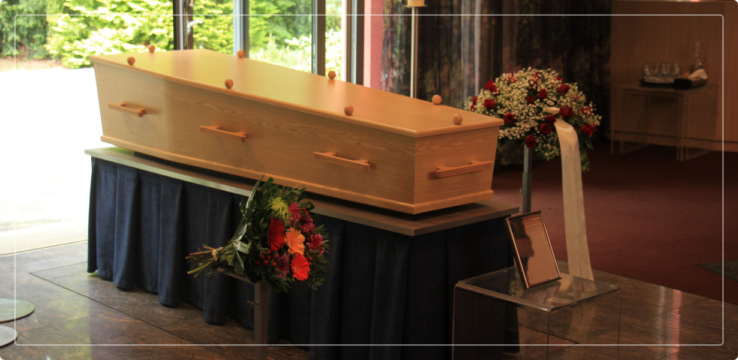
It’s more like a traditional funeral, where there is a service at a crematorium with the coffin present, but without some of the unwanted ceremonial excess, such as no hearse or limousines, and still no option to embalm or view the deceased. Mourners would just turn up at the time of the funeral and the coffin would already be waiting in the chapel.
There are typically two options – small intimate gatherings for a handful of people that will last perhaps 20 minutes, or a full service that can take 35-45 minutes.
The small services will be ‘family-led’, which means there will not be an official celebrant, and it will be down to the family to determine and lead how that 20 minutes is spent. It could just be time spent in quiet reflection, or it could involve a eulogy, readings and music.
The full service will be very much like a normal funeral service, with a celebrant and music, hymns, readings or whatever you wish.
Many local funeral directors will offer this if asked, it’s not really a direct cremation though – it’s a simple funeral. Some funeral directors will also have the option for a service in their own chapel, which will be located in their funeral home. After the service the funeral director will then take the coffin to the crematorium to have an unattended cremation.
These services are sitting in the middle – still allowing mourners to experience a service – but without the extras like a hearse or limousines, they can cost several hundred pounds less than a traditional funeral.
FAQs About Direct Cremations
Can family members attend a direct cremation?
Most direct cremations are unattended, but some providers offer an attended option at an additional cost.
How much does a direct cremation cost?
Direct cremations are typically more affordable than traditional funerals, with the average cost for a direct cremation £1,498. Some headline prices are lower, but there will be additional costs to be added in most instances. A Best Direct Cremation costs £1,499, and the only additional fee would be a Priority care collection fee of £250 if the person died anyone other than a hospital.
Can I hold a memorial service after a direct cremation?
Absolutely. Families often hold a celebration of life or private memorial service after receiving the ashes.
What’s the difference between a direct cremation and a traditional cremation?
A direct cremation does not include a funeral service or ceremony, whereas a traditional cremation typically involves a formal service and ceremonial extras like a Hearse and limousines.
Who provides direct cremation services?
Both national providers and local funeral directors offer direct cremations. By using Best Direct Cremation you can know you’re in great care, as your service will always be delivered by one of our local Best Funeral Directors.
Where can I scatter ashes?
Ashes can be scattered freely on your own land or over a body of water. Elsewhere you will need the landowners permission. Many places will allow this freely for example the woodland trust provides guidance and implied permission if you follow thier rules.
Direct Cremations - Done Properly
To arrange a direct cremation that is delivered by a local funeral director – as it should be – call Best Direct Cremation